Showing posts with label News. Show all posts

Friday, 10 December 2021

Why WhatsApp banned your number?


A few days back WhatsApp banned more than 2.2 million Indian accounts, and here is the reason why? 


You use Whatsapp in such a way that is : 


1. Used Others MOD Whatsapp Messenger.


(a) violate, misappropriate, or infringe the rights of WhatsApp, our users, or others, including privacy, publicity, intellectual property, or other proprietary rights; 

(b) are illegal, obscene, defamatory, threatening, intimidating, harassing, hateful, racially or ethnically offensive, or instigate or encourage conduct that would be illegal or otherwise inappropriate, such as promoting violent crimes, endangering or exploiting children or others, or coordinating harm; 

(c)involve publishing falsehoods, misrepresentations, or misleading statements; 

(d) impersonate someone; 

(e) involve sending illegal or impermissible communications such as bulk messaging, auto-messaging, auto-dialing, and the like; or 

(f) involve any non-personal use of our Services unless otherwise authorized by us.

(g) reverse engineer, alter, modify, create derivative works from, decompile, or extract code from our Services; 

(h) send, store, or transmit viruses or other harmful computer code through or onto our Services; 

(i) gain or attempt to gain unauthorized access to our Services or systems; (d) interfere with or disrupt the safety, security, confidentiality, integrity, availability, or performance of our Services;

 (j) create accounts for our Services through unauthorized or automated means; 

(k) collect information of or about our users in any impermissible or unauthorized manner; 

(l) sell, resell, rent, or charge for our Services or data obtained from us or our Services in an unauthorized manner; 

(m) distribute or make our Services available over a network where they could be used by multiple devices at the same time, except as authorized through tools we have expressly provided via our Services; 

(N) create software or APIs that function substantially the same as our Services and offer them for use by third parties in an unauthorized manner; or 

(o) misuse any reporting channels, such as by submitting fraudulent or groundless reports or appeals.

Saturday, 4 December 2021

Introduction to Clickworker


Clickworker is a great program for those looking to make some extra cash from home over the internet. If you’ve heard of Amazon mturk, Clickworker is very similar in which you complete tasks on a web browser and get paid to do so. The only problem with most of these rewards programs is that the payout is extremely low.

Clickworker has a wide variety of tasks to complete that tell you how much you’re going to earn before you do them, meaning you can choose how much you want to earn. This works out to making anywhere from as low as $3 per hour and as high as $25 per hour. We’re going to filter out those low-paying tasks and tell you how you can receive the highest payout potential.

Before we begin, I must warn you that you cannot rely on this method for a steady income. There are many users already on Clickworker, and there’s only a certain number of spots available for each task. That’s why once you log-in you have to act quick to find the tasks with the highest payouts and finish them in a timely manner to get paid.

Once you get the hang of it after the initial setup, you could be making an extra $200 – $300 per month with about 20 hours of work.

Sunday, 4 July 2021

WhatsApp may soon allow you to select the video quality you want to share.

WhatsApp is constantly evolving and improving, and according to WABetaInfo, we recently learned that an "expiring media" feature is currently going out on the beta channel. WhatsApp may soon include an even more handy feature: you may be able to select the video quality that will be uploaded when you send someone a video.

WABetaInfo was the first to notice the new video upload quality option, and while it isn't live yet, their report verifies that it is in the works. Selecting the video quality before sending is advantageous since it allows you to choose the best option for saving bandwidth or sharing the video without significant compression. You can email videos in "data saver" mode, which compresses them and saves space. and don’t use too much data. WhatsApp has already had a data saver option for calls for years, so it’s a bit weird it has taken this long to get an actual option that the user can choose just for videos.

WhatsApp video quality control options for when sending a videoAn explanation of each of these three options was also given by WABetaInfo.

  • Auto (recommended): WhatsApp will detect what is the best compression algorithm for specific videos.
  • Best quality: WhatsApp will always send the video using the best quality available!
  • Data saver: when a Data saver is enabled in your Android settings, WhatsApp will compress videos before sending them.
This isn't an active feature right now, thus it can't be used even in the beta channel. However, it's a feature that should be added in the future, especially because it's a popular request. Some people don’t even have data caps, they just have slow internet, and automatic compression of videos means that both the sender can send it quicker

The files will also take up less space when backed up to Google Drive, saving you storage space in your Google account. On the other hand, for those with speedy connections, being able to send higher-quality videos will ensure that what you see is what your recipient sees.

Thursday, 30 April 2020

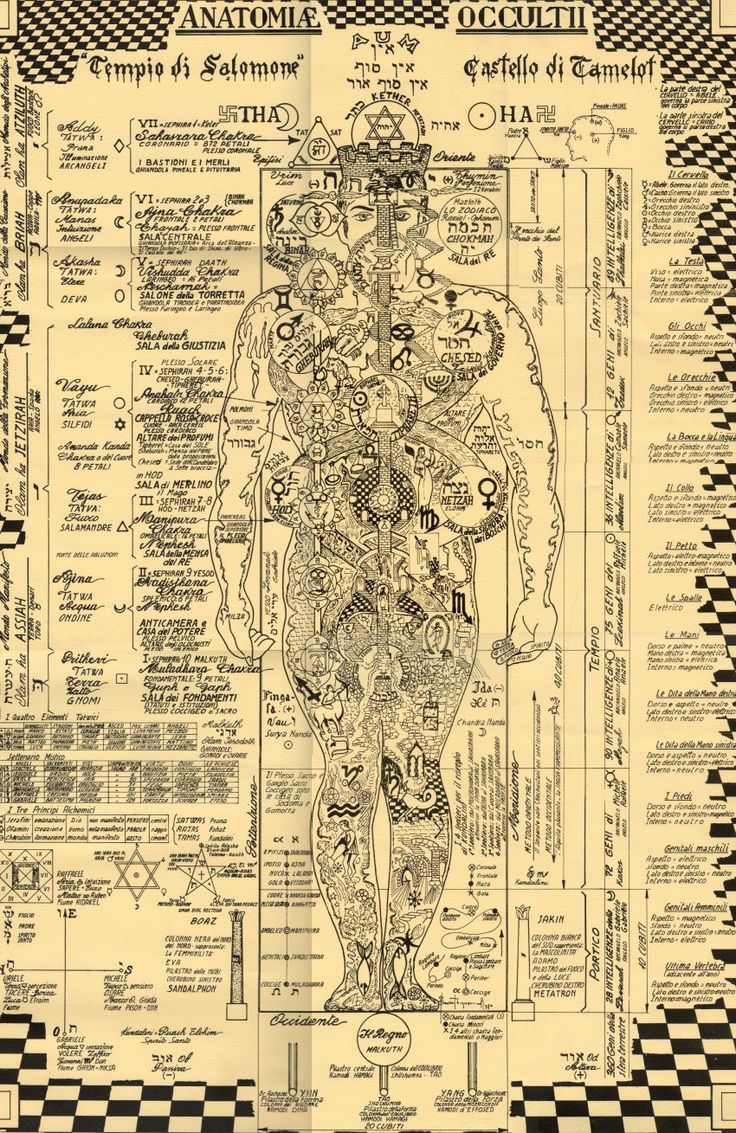
The Occult Anatomy of Man

Manly P. Hall

In Scripture we are told that God made man in his own image. It is so stated not only in the Christian Bible but also in the holy writings of nearly all enlightened people. The Jewish patriarchs taught that the human body was the microcosm, or little cosmos, made in the image of the macrocosm, or the great cosmos. This analogy between the finite and infinite is said to be one of the keys by the aid of which the secrets of Holy Write are unlocked.
There is no doubt that the Old Testament is a physiological and anatomical textbook to those capable of reading it from a scientific viewpoint. The functions of the human body, the attributes of the human mind, and the qualities of the human soul, have been personified by the wise men fo the ancient world, and a great drama has been built around their relationships to themselves and to each other. To the great Egyptian demigod, Hermes, the human race owes its concept of the law of analogy.
The great Hermetic axiom was, That which is above is like unto that which is below, and that which is below is like unto that which is above.
Occult anatomy of the human figure
Excerpt from Franz Bardon’s “Initiation Into Hermetics – …..each part of the body is also, in analogy with the effect of the elements in the body, influenced by a specific element, which finds its expression in the polarity of the responsive part of the body. It happens to be a very interesting fact that in the workshop, respectively in the clockwork or mechanism, which is to say in the human organism, some organs, from the inside to the outside, reciprocally own the electrical fluid, and from the outside to the inside they possess the magnetical fluid, which affects the functions in the entire organism in an analogous and harmonious way. In other organs the reverse process takes place, the electrical fluid operating from the outside to the inside, the magnetical one from the inside to the outside. This knowledge of the polar emanation is called in the hermetic art the “occult anatomy of the body”. And the knowledge of the effect of this occult anatomy is extremely important for every adept who wants to know his body, to influence and to control it.
I shall therefore describe this occult anatomy of the human body with respect to the electrical and magnetical fluid, that is to say, in the positive and in the negative sphere of action.
These arguments will turn to magnetopath’s great advantage because he will treat the sick part of the body wither with the electrical or the magnetical fluid, according to the centre of the disease. But this knowledge will bring great profit to everybody else too.
The Head: The forepart is electric, the back of the head is magnetic and so is the right side; the left side is electric and so is the middle.
The Eyes: The forepart is neutral and so is the background. The right side is electric and so it is with the left side. The inside is magnetical
The Ears: Forepart neutral, back part also. Right side is magnetical, left side electrical, inside neutral.
Mouth and Tongue: Forepart neutral, back part as well. Right side and left side both neutral, inside magnetical.
The Neck: Forepart, back part and right side magnetical, left side and inside electrical.
The Chest: Forepart electromagnetic, back part electrical, right side and inside neutral, left side electrical.
The Abdomen: Forepart electrical, back part and right side magnetical left side electrical, the inside magnetical.
The Hands: Forepart neutral, back part also, right side magnetical, left side electrical, the inside neutral.
The Fingers of the Right Hand: Fore- and back part neutral, right side electrical, left side also, the inside neutral.
The Fingers of the Left Hand: Fore- and back part neutral, right side electrical, left side as well, the inside neutral.
The Feet: Fore- and back part neutral, right side magnetical, left side electrical, the inside neutral.
The Male Genitals: Forepart electrical, back part neutral, right and left side also, the inside magnetical.
The Female Genitals: Forepart magnetical, back part, right and left side neutral, the inside electrical.
The Last Vertebra & Anus: Fore and back part neutral, right and left side as well, the inside magnetical.
With the help of this occult anatomy and the key of the tetrapolar magnet, the adept may compile further analogies if wanted. The alchemist will recognize that the human body represents a genuine Athanor in which the most perfect alchemistic process, the Great Work or the preparation of the Philosophers’ Stone is visibly performed.
Herewith the chapter dealing with the body is finished. I do not assert that all has been regarded, but in any case, with respect to the elements, I mean to say, the four-pole magnet, I have treated the most important problems and revealed the secret of the Tetragrammaton in view of the body.

Thursday, 12 October 2017

Photoshop Voices

After Mastering in Images
Adobe now target voice
It  invented a new way to Photoshop the voice and it's really the best
First they record started the real voice then replace some word in the sentences which the speaker never said. It sound amazing and they called this latest invention "Voco"  & also they provide 20 minutes for recording,  but it isn't commercially available yet.

ClickHere4Video

Thursday, 9 March 2017

Your Anti virus? Here what CIA think of it!

The hackers are quoted taking potshots at anti-virus firms, suggesting the American intelligence agencies are keenly aware of flaws in the products meant to be keeping us all safe online.

The data published by WikiLeaks isn't systematic enough to draw firm conclusions about the reliability of one product or another and the uncertain dating means the CIA's critiques provide more of a snapshot than an overview.

Still, the posts show America's top cyberspies aren't always flattering about commonly used security software.

___

COMODO

The CIA appears to give mixed praise to the anti-virus solution by Comodo, the self-described "global leader in cyber security solutions."

One post by an apparent CIA hacker published by WikiLeaks said Comodo is "a colossal pain in the posterior. It literally catches everything until you tell it not to."

Just don't upgrade to Comodo 6.

That version "doesn't catch nearly as much stuff," the hacker appears to say, describing a particularly glaring vulnerability as a "Gaping Hole of DOOM."

Melih Abdulhayoglu, Comodo's chief executive, emphasized the first part of the post, saying that being called a pain by the CIA was "a badge of honor we will wear proudly." In a statement, he said that the vulnerability described by the CIA was obsolete. Comodo 6 was released in 2013; Comodo 10 was released in January.

___

KASPERSKY LAB

This is one of the world's leading providers of security protection. But it may not keep you safe from the CIA.

A flaw in the code "enables us to bypass Kaspersky's protections," according to another post .

Founder Eugene Kaspersky dismissed the comment, saying in a Twitter message that the flaw identified in the CIA leak was fixed "years ago."

A statement from his company said a second flaw apparently identified by the agency was fixed in December 2015.

___

AVIRA

A CIA hacker appears to say that this German-engineered anti-virus product is "typically easy to evade."

The firm said in a statement that it had fixed what it described as "a minor vulnerability" within a few hours of the WikiLeaks release.

It added that it had no evidence that any of its users had been affected by the bug.

___

AVG

The CIA apparently had a trick to defeat AVG that was "totally sweet."

Ondrej Vlcek, the chief technology officer for AVG's owner, Netherlands-based Avast, said that the CIA appeared to be discussing a "theoretical bypass" of AVG's scanning engine which would have required additional work to successfully deploy as malicious software.

"We would not consider it critical," he said of the issue. Speaking via email, he added that it seemed the post was written "some time" ago.

"This is in fact not an issue today given the current operation of the AVG products," he said.

___

F-SECURE

One CIA hacker appeared to be particularly scathing about this Finnish firm's security software. It's a "lower tier product that causes us minimal difficulty," one apparent hacker said .

F-Secure noted that the company was described elsewhere , along with Avira, as an "annoying troublemaker." It said there was a broader point to be made about the CIA's apparent decision not to warn anti-virus companies about the flaws in their products.

The agency "considered it more important to keep everybody unsecure ... and maybe use the vulnerability for its own purposes or counter terrorism purposes," F-Secure's chief research officer Mikko Hypponen said in a statement.

___

BITDEFENDER

The posts aren't complete enough to say for sure, but Bitdefender, a Romanian anti-virus product, seemed to cause CIA hackers a lot of trouble.

One post appears to suggest that Bitdefender could be defeated by a bit of tinkering.

Or maybe not.

"Alas, we've just tried this," a response to the post said. "Bitdefender is still mad."

Bitdefender representative Marius Buterchi said the only conclusion to draw was that "we are detecting the CIA tools."

Sunday, 26 February 2017

Ever heard of VPN (Virtual Private Network)

As you know, a Virtual Private Network is a secure network that allows you to access networks and the internet as safely as possible with a few performance enhancements such as geographic flexibility or surpassing bandwidth restrictions.

What you may not know is that VPN is now available at the best VPN providers for most Android devices. Not just your mobile phone or tablet but your laptop too; essentially any piece of tech you carry around with you can access mobile VPN – but what’s it for? Surely a mobile device can make use of mobile data or Wi-Fi hotspots for network access?

Well yes they can but if you’re going out of your way to be secure on your home network, why allow your guard down when you step out of the house? Can you afford for your phone or laptop to be hacked via a Wi-FI hotspot? There has been a rise in criminals hacking ‘free Wi-Fi’ in 2015; Will your business maintain its reputation if all the customers’ details are freely accessible thanks to poor network security on the move?

The answer to these questions is almost certainly no and a big tick in a big box for Mobile VPN but the case in favour doesn’t end there.

Mobile VPN offers a similar level of geographic flexibility when compared to normal VPN as it can offer remote access to your home network – an invaluable tool to have when you think about the positives. In brief, you could upload basic information to your Android device and leave all the sensitive data on your home network for secure, mobile access when required – far less risk.

Remote access is nothing new but it has always been restricted to desktop computers that are hard wired to a network – now that we can access a network remotely, we can look to the present and future applications of such a technological advancement.

The NHS make use of Mobile VPN to securely access medical records – imagine a travelling nurse or carer attending a property and being given all the information they need instantly with no threat of a security breach. Public safety organisations also use Mobile VPN to carry out checks on those they have arrested and for their dash-cam technology – a high speed, secure uplink to the base of operations network means full coverage!

This all sounds very confusing and, in truth, it certainly can be tough to get your head around. However, if you need more information, you can find VPN protocols explained online that can break things down for you no matter your computing proficiency.

In brief, Mobile VPN can surpass bandwidth restrictions to give you a stronger connection on the move, it’s more secure than ever before, it allows remote access to your home network and the roaming capabilities mean you’ll spend less time being interrupted by connection issues and more time accessing the network and files you need to succeed.

Friday, 17 February 2017

Trash Dove Facebook Birds memes

Trash Dove has flown straight into internet fame. The purple, head-flinging bird has taken over Facebook after going viral in Thailand, spurring plenty of hilarious remixes and memes. The garbage bird was created by illustrator and animator Syd Weiler back in the summer of 2016, though she didn’t expect for the dove to gain such notoriety. Now people everywhere are going gaga for the beaked beauty.

Last year when Weiler was traveling and sitting at a pond in Minneapolis, she saw a bunch of pigeons pecking around and an older man feeding the flock. That’s the moment that inspired the illustrator.

“They’re really funny birds; a little rainbow-y and shiny when the sun hits them. They’re almost pretty, but then they beg for crumbs,” Weiler tells Inverse. “They’re like doves, but they eat trash. Doves are classier pigeons.”

Then in September, Weiler streamed drawing Trash Dove using Adobe Photoshop and a tablet on her Twitch channel, where she regularly livestreams herself creating her artwork.

After that, she put it on the iOS store as an iPhone sticker pack, added it to Facebook, and licensed the bird. It wasn’t until last week that Trash Dove went viral. Weiler woke up on Thursday and realized that her work had taken off in Thailand, with people sending her articles and videos all in Thai.

Nokia Rule!

According to the reports, Nokia has decided to launch Nokia 3310 again. This phone is an everlasting phone which is remembered by all the Nokia fans. Nokia could launch its 3310 model in this year at Mobile World Congress in Barcelona, Spain.

The Nokia 3310 device will be launched at the Nokia HMD event which will be on February 26. It is expected to cost $63 (€59 or £49) as reported by the VentureBeat’s Evan Bass. Nokia has recently introduced its Nokia 6 model in China and it was a big hit.

The Nokia Company is known for its long-lasting phones. Nokia 3310 was first released in the year 2000 and was a big hit. This model was released in place of Nokia 3210. Nokia phones are famous because of their unbreakable hardware. The Snake game of Nokia 3310 was very well-known at that time. The extreme battery life of that phone influences the user to buy this phone. The battery continues 55 hours on backup.

Nokia 3310 Could Be Launched In This Month
As we all know, Nokia is going to release Nokia 6 and Nokia 5 which will feature Android Nougat. Reports also state Nokia could also launch a new Nokia 3 this year. Nokia 3310 could be launched in a modern look and with enhanced features.

The Nokia 3310 had a feature to create text messages ahead of the SMS character edge, an 84 x 48-pixel monochrome display, screen savers, a calculator, and games like Snake II. It had an awesome feature of saving seven custom ringtones. The cover of rear and front could also be replaced easily. The storage of Nokia 3310 was only 32MB, but this was a lot in 2000. Nokia 3310 was tough and could last in very bad surroundings.

The impression of Nokia was excellent before the introduction of the latest iPhone’s. In the past, Nokia was the king of the phone market and Nokia 3310 was one of its best devices. We hope that they will launch more interesting phones which can be appreciated by its users.

Friday, 3 February 2017

Jarvis Inspired

Open Your Notepad and Ctrl + c & ctrl + v this Script
and save it as .vbs e.g Welcome.vbs
Dim speaks, speech
speaks="Welcome to your PC, Username"
Set speech=CreateObject("sapi.spvoice")
speech.Speak speaks

Sunday, 22 January 2017

You will Love this Latest Twitter Feature

You will no longer miss the tweets from your best friend as Twitter is testing
a new feature that highlights tweets from a select, single person it thinks you should not miss.
According to a report on Tech Crunch on Friday,
a single person's tweets will get their own special spot on your timeline.
The feature is similar to Twitter's 'In Case You Missed It'
which rounds up the tweets from those accounts you more regularly engage with,
or others that Twitter thinks you might like.Like the 'ICYMI' feature, users can dismiss
 this new 'BFF' module when it appears, letting
 Twitter know that you want to see this feature less often.
"The account it chooses to show you is based on a number of signals -
 how often you engage with the account in question.
Repeat engagement is also used to determine whether or not Twitter shows you
 the module at all," the report noted, adding that the test was underway for select users on iOS,
 Android, and the web.However, it was unclear how correctly
 Twitter has figured out whose tweets a users may want to see the most.
"...I don't think I like anybody enough to justify this new feature you're trying,
" the report quoted a Twitter user joking.

Monday, 16 January 2017

Bitcoin II

Earn Bitcoins from mining 💎

Bitcoin mining is the process by which new Bitcoins are generated. When you perfom mining, your computer adds new Bitcoin transactions to the block chain (a public ledger where all Bitcoin transactions are stored) and searches for new blocks. A block is a file that has the most recent Bitcoin transactions recorded in it. When your computer discovers a new block, you receive a certain number of Bitcoins. Currently a block contains BTC 25. This number changes throughout time and gets smaller by the factor 0.5 every four years.

Since bitcoin mining has become a hardware intense and therefore expensive process, most individual miners join a so called mining pool. One of the mining pools you can conect to is BitMinter for example. By providing computing power to their pool you can earn Bitcoins from mining without the need to build your own big mining farm. There are entire communities around Bitcoin mining and besides the fact that you earn Bitcoins it's also fun. You meet new people online and get in-depth knowledge about Bitcoin as a protocol and technology.

If you want to earn Bitcoins through mining, be aware that it is a costly and time consuming process. Read the respective introductions and manuals to learn more about it. This website is a good starting point. Unless you are mining just out of curiosity and want to get to know the technology, it is important to make a cost / benefit analysis. Hardware prices, electricity costs, bitcoin difficulty and the Bitcoin value influence the profitability of Bitcoin mining. If all this seems interesting to you and you want to earn Bitcoins from mining make your first calculations on the Mining Dashboard.

5. Earn Bitcoins by getting tipped 👏

When you earn Bitcoins through tips, it is much like accepting Bitcoin as a means of payment. You need a wallet, a QR-code with your Bitcoin address on it and the people who can potentially give you a tip need to be aware of it. There are various places where you can receive Bitcoin tips.

Again, your shop is the first thing to start with in case you have one. It's just a bit simpler because since tips are voluntary you don't really need to check the incoming payment and the exact amount. Simply display the QR-code and check each day what came in.
With tips, the nice thing is that you don't necessarily need to have a shop. A blog for instance or any other website is sufficient. You can display the QR-code or just your Bitcoin address at the bottom of your page or wherever it seems convenient and let people decide how much they want to tip you. You can also view how this looks like in the footer of this German blog bitcoins21.
Another really cool way to get tipped online is ChangeTip. This service allows you to integrate tips on all major social networks, YouTube and GitHub. Very nice!
Imagine you have a restaurant and want to encourage your customers to tip with Bitcoins, there is this nice service: bctip is a website where you can print little paper vouchers that have a certain Bitcoin balance on them. When your customer has one of these, he or she can simply give it to you or your employees and you can redeem it like a coupon.

6. Earn Bitcoins through trading

Some people would say that trading is a form of gambling. While there these two things have something in common, there are also fundamental differences. When you gamble (and assuming that it's a fair game) you have a certain probability of winning and losing. When you trade assets, this gets much more complex. I don't want to go into too much detail here. I just want to outline the concept how you can earn Bitcoins with trading.

The safest way to make money with trading is through arbitrage. In short, this means that you see an opportunity to buy an asset in one place for a certain price and sell it immediately at another place for a higher price. It is important that you know you can sell the asset immediately at a cert tain price. If this does not hold, then we are talking of speculation - or gambling if you prefer.

The Bitcoin world, in my opinion offers such arbitrage opportunities. But they are not as simple to execute as it might seem at first sight. Price differences between exchanges often come for certain reasons. The speed of fiat money transfers and access restrictions are just the most striking ones. You have to find out the concrete opportunities yourself. One place to start is this thread on Bitcoin StackExchange. Also, not every opportunity is available to everyone. Go and have a look at the price differences between exchanges and check out if you can find opportunities.

If you want to give arbitrage a try, you need to get Bitcoins almost instantly. One of the few sites where you don't need to sign up is bit4coin. If you spot an opportunity and want to act on it immediately, this is a way to get a hold of Bitcoins fast. If you manage to earn Bitcoins from arbitrage, this can be very profitable after all. But start cautiously as it really does require some experience.

The other way to earn Bitcoins from trading is simple speculation. In this case you would buy Bitcoins, wait until the price increases, then sell for a fiat currency. When the price drops again, you buy more Bitcoins and start all over. For this to work out you either need to be very lucky or capable of predicting the future.

There are people who are good traders and who can recognize patterns from price charts. But that's something very specialized and I'm not sure if I believe in this. So for me, if you want to earn Bitcoins from this form of trading it could also be categorized as gambling. And actually it's even more risky if you compare it to a fair game where you know your odds. When you speculate with assets, you can extract your odds from historical prices. But never start believing this would tell you something about the future reliably.

Earn Bitcoins as a regular income 👨

Getting your monthly paycheck in Bitcoins is probably the steadiest way to earn Bitcoins. There aren't many organizations who would pay you in Bitcoins but there are some at least. And maybe there will be more as acceptance increases continuously. Gavin Andresen, core Bitcoin developer of the Bitcoin Foundation stated in this interview that he gets paid in Bitcoins. And chances are, that when your employer accepts Bitcoins they might be willing to pay you in Bitcoin, too.

Apart from being employed by a company or a non-profit you can be self-employed and get paid in Bitcoins. Being a freelancer has multiple advantages. You can for example earn Bitcoins conveniently from home by participating in this bitcoin affiliate program.

You can also work from home for others. Here is a list of sites where you can search job offers or where you can post an offer yourself. It's a very convenient way to earn Bitcoins, because many jobs can be completed from home.

Bitcointalk Forum Services Section is another starting point to look for job listings that are paid in Bitcoins. Some of the jobs are done easily within a short amount of time so it's a good way to earn Bitcoins quickly.
Jobs 4 Bitcoins on reddit has a focus on job listings for programmers. But again, it's not purely programming and it's definitely worthwile to browse through the different offers.
BitGigs is an online job board with many diverse job offers. The variety is reall amazing so go check it out.
Coinality has a different approach by not simply listing jobs where you can earn Bitcoins, but displaying them on a map. This comes in handy when you are interested in a local job somewhere near you. The number of listings could be higher but when it keeps growing it will become more interesting.
XBTFreelancer is another job board for gigs that are paid in Bitcoin. These jobs are mostly also software related. If you have programming or other IT related skills it is therefore probaly easiest for you to earn Bitcoins with your experise.
Then of course, you can start your own Bitcoin related business and earn Bitcoins this way. Either as a fully fletched business of goods or services or you could run a website and place ads from CoinURL. If you want to start or already have a brick and mortar shop check out the earn Bitcoins downloads. The flyer shows you, how easy it is to integrate Bitcoins payments in your shop.

BitCoin

What is Bitcoin?
Bitcoin is a type of digital currency in which encryption techniques are used to regulate the generation of units of currency and verify the transfer of funds, operating independently of a central bank.

Bitcoin is a new currency that was created in 2009 by an unknown person using the alias Satoshi Nakamoto.

The basics for a new user

As a new user, you can get started with Bitcoin without understanding the technical details. Once you have installed a Bitcoin wallet on your computer or mobile phone, it will generate your first Bitcoin address and you can create more whenever you need one. You can disclose your addresses to your friends so that they can pay you or vice versa. In fact, this is pretty similar to how email works, except that Bitcoin addresses should only be used once.

Balances - block chain

The block chain is a shared public ledger on which the entire Bitcoin network relies. All confirmed transactions are included in the block chain. This way, Bitcoin wallets can calculate their spendable balance and new transactions can be verified to be spending bitcoins that are actually owned by the spender. The integrity and the chronological order of the block chain are enforced with cryptography.

Transactions - private keys

A transaction is a transfer of value between Bitcoin wallets that gets included in the block chain. Bitcoin wallets keep a secret piece of data called a private key or seed, which is used to sign transactions, providing a mathematical proof that they have come from the owner of the wallet. The signature also prevents the transaction from being altered by anybody once it has been issued. All transactions are broadcast between users and usually begin to be confirmed by the network in the following 10 minutes, through a process called mining.

Processing - mining

Mining is a distributed consensus system that is used to confirm waiting transactions by including them in the block chain. It enforces a chronological order in the block chain, protects the neutrality of the network, and allows different computers to agree on the state of the system. To be confirmed, transactions must be packed in a block that fits very strict cryptographic rules that will be verified by the network. These rules prevent previous blocks from being modified because doing so would invalidate all following blocks. Mining also creates the equivalent of a competitive lottery that prevents any individual from easily adding new blocks consecutively in the block chain. This way, no individuals can control what is included in the block chain or replace parts of the block chain to roll back their own spends.

1. Earn Bitcoins by accepting them as a means of payment 🏬

In my opinion, the best and easiest way to earn Bitcoins is to accept them as a means of payment. If you have a small business, the integration is done quickly and easily. No matter if you have a brick and mortar shop or an online business, no matter if you sell goods or services. You just have to complete the following three steps:

Get a free online Bitcoin wallet from Coinbase. If you're not sure what a Bitcoin wallet is, check out my What is Bitcoin section. There are also many other providers apart from Coinbase. When you sign up with LocalBitcoins you will also get a free bitcoin wallet with a broad range of functions. Find out which works best for you. And remember, no wallet is absolutely safe, so be careful with your money. Especially make sure you keep your Bitcoins stored safely in at least 2 or 3 different places.

Display a QR-code with your Bitcoin address next to your cash register. There are two options here.
When you have your wallet, go to a section that says 'Receive Money' or 'Add funds' or something similar. There will usually be a QR-code that has your Bitcoin address encoded in it. Print out the image with the QR-code and place it next to your cash register. Your customers will typically have a Bitcoin app installed on their smartphone where they can enter the value of the purchase in USD or EUR. Their app calculates the corresponding Bitcoin value. It automatically takes the current exchange rate to get the right amount. On your wallet account you can check the confirmation of your incoming payment.
Some wallets offer a 'Receive Money' functionality. When you earn Bitcoins by accepting them as a payment method on a more regular basis it comes in handy when you use a button called 'Create Payment Request'. Here you enter the Bitcoin amount the customer has to pay and it will show the corresponding QR-code automatically. This way the customer doesn't need to enter an amount which makes the payment for them more convenient. For this method you need to calculate the Bitcoin amount from your USD or EUR price before you can enter it for the QR-code to generate.

Display the 'Bitcoin accepted here' logo at the entrance to your shop to show everybody your innovative payment integration. You will find a printable version of the logo plus a free guide under Downloads.

That's it. It's so easy, start to earn Bitcoins by selling goods and services today! This is just a quick description how to earn Bitcoins by accepting them as a means of payment. These links are also helpful:

How to accept Bitcoin, for small businesses includes more info for online businesses
The Bitcoin Wiki Trade page shows you which other businesses already accept Bitcoin. Add your shop here to get more publicity
Coinmap is an OpenStreetMap where you can see the geographical distribution of Bitcoin accepting businesses. Add your shop here as well
There are many other lists and indexes where you can add your shop. I find the two mentioned ones to work best so far. If you have one that you think is really good and complete, contact me. I will be happy to add other links here.

2. Earn free Bitcoins by completing tasks on websites ✔

There are many websites which offer you to earn free Bitcoins. With most of these sites, the concept is that you visit the site and just for looking at it you get a small amount of Bitcoins. The concept has something in common with watching good old free TV. You watch a lot of ads and inbetween you get something you actually want to see, like a film or music clips.

While this is a legitimate concept, the return on your invested time is very little. So when you earn Bitcoins from these advertising sites, the Bitcoins actually come at the cost of your time. As the saying goes 'there is no free lunch'. But see for yourself, here is a list of some of the sites that I find interesting

BitVisitor :: Earn Bitcoins for watching websites or video Every page is shown for five minutes. Then you can click 'Next' for confirmation and move on to the next page. What I like about this site is that payouts come within roughly an hour. This is a major advantage compared to other sites that pay Bitcoins for completing tasks. Also, you don't need an user account here, you just enter your Bitcoin address. The amount of Bitcoins you can earn here is limited though. Per five minutes you get something like µBTC 100 (that's 100 microcoins or BTC 0.00001) which means that your hourly payout is something like BTC 0.00012. That's not too much money but it is a start to make you first Satoshis and get familiar with Bitcoin. And note, payout per five minute period varies. So the above calculation only holds if the average payout per five minutes is µBTC 100.
freedigitalmoney.com :: Earn Bitcoins by getting rewards fo purchases made in Bitcoin. On this site you also don't need a user account and just have to enter your Bitcoin address to earn Bitcoins.
CoinWorker :: Earn Bitcoins by completing analytical tasks. A user account is required here. I haven't tried this service but payouts seem to be a bit higher than with the aforementioned sites.
Bitfortip :: Earn Bitcoins by answering forum questions. This is a nice service because it brings people together who are interested in Bitcoin and many other topics. At the same time it allows to pay rewards in bitcoin for answering questions. This is something that would not have been possible without a currency like Bitcoin that has low transaction fees and instant transfers
Earning Bitcoins from completing tasks on websites is a viable option to actually earn some Bitcoins, but don't expect your income to be very large. I regard it as a first step to get familiar with Bitcoin in general. Also, it is interesting to see what kind of services are enabled through frictionless money transfers.

3. Earn Bitcoins from interest payments %

If you already have some Bitcoins, put your Bitcoins to work for you. Earn Bitcoins through interest payments by lending them out.

Lend directly to someone you know. This allows you to assess personally, whether you regard the borrower as trustworthy. Then the two of you only need to agree on the terms like duration and interest rate and off you go. The drawback is, however, that you probably will not have too many acquaintances who match your amount, duration and interest rate requirements. But it's a nice way to earn Bitcoins.
Peer to peer Bitcoin lending websites with listings from various borrowers are another option. Bitbond is such a peer-to-peer lending site. Borrowers publish funding requests and you can contribute to their loan. You can fund small portions of many loans and thereby diversify default risk. Bitcoin loans usually work the same way as fiat currency loans. The borrower gets a certain amount of money over a specified time and repays the money with interest. There are two things you need to be aware of when you lend Bitcoins. The site needs to be trustworthy and the borrower needs to be trustworthy. When the site assesses the creditworthiness of their applicants the information given about borrowers can be more credible.

A Bitcoin banking like model. Here you place your Bitcoins as a deposit with a site that pays you a fixed interest rate on these deposits. As everything here, this method has advantages and disadvantages. The good thing is, that you don't need to diversify your Bitcoins over many borrowers. You just place your Bitcoins with your Bitcoin bank and that's it. You earn Bitcoins as a steady stream of interest income. However, be very careful. In the previous case of peer to peer lending you diversify your lending activity over many borrowers. In the banking model you trust one single borrower which is the bank. If they don't do a good job in managing your Bitcoins, everything can be lost at once. That's because the bank takes you deposits and invests them in assets, the mo st important assets usually being loans. If they do a good job you are fine because you simply collect the interest payment. If they don't do a good job you take the hit. An there is no deposit insurance in the Bitcoin world, too.
To sum it up, Bitcoin lending is a good way to make more Bitcoins from what you already have. And please notice this disclaimer: only lend through sites that you trust. Such sites will comply with the usual requirements that you expect from non-Bitcoin related sites as well. That means they have proper terms and conditions in place, they disclose their status of incorporation and contact details. Some sites in the Bitcoin world do not do this and in the end people wonder what happened to their Bitcoins.

Sunday, 11 October 2015

History of Nokia

1) The ringtone “Nokia tune” is actually based on a 19th century guitar work named “Gran Vals” by Spanish musician Francisco Tárrega. The Nokia Tune was originally named “Grande Valse” on Nokia phones but was changed to “Nokia Tune” around 1998 when it became so well known that people referred to it as the “Nokia Tune.”
2) The world’s first commercial GSM call was made in 1991 in Helsinki over a Nokia-supplied network, by Prime Minister of Finland Harri Holkeri, using a Nokia phone.
3) Nokia is currently the world’s largest digital camera manufacturer, as the sales of its camera-equipped mobile phones have exceeded those of any conventional camera manufacturer.
4) The “Special” tone available to users of Nokia phones when receiving SMS (text messages) is actually Morse code for “SMS”. Similarly, the “Ascending” SMS tone is Morse code for “Connecting People,” Nokia’s slogan. The “Standard” SMS tone is Morse code for “M” (Message).
5) The Nokia corporate font (typeface) is the AgfaMonotype Nokia Sans font, originally designed by Eric Spiekermann. Its mobile phone User’s Guides Nokia mostly used the Agfa Rotis Sans font.
6) In Asia, the digit 4 never appears in any Nokia handset model number, because 4 is considered unlucky in many parts of Southeast/East Asia.
7) Nokia was listed as the 20th most admirable company worldwide in Fortune’s list of 2006 (1st in network communications, 4th non-US company).
8. Unlike other modern day handsets, Nokia phones do not automatically start the call timer when the call is connected, but start it when the call is initiated. (Except for Series 60 based handsets like the Nokia 6600)
9) Nokia is sometimes called aikon (Nokia backwards) by non-Nokia mobile phone users and by mobile software developers, because “aikon” is used in various SDK software packages, including Nokia’s own Symbian S60 SDK.
10) The name of the town of Nokia originated from the river which flowed through the town. The river itself, Nokianvirta, was named after the old Finnish word originally meaning sable, later pine marten. A species of this small, black-furred predatory animal was once found in the region, but it is now extinct.

nokia mobile company profile, nokia mobile history phone, nokia brief history, history nokia, nokia cell phone history, nokia mobile history in india, nokia mobile history, nokia mobile history of company, nokia mobile history wikipedia, Nokia Phone History, History of Nokia India

Sunday, 19 April 2015

10 Scariest NSA Secret Exposed By Snoden and You need to know it

The scariest revelation to come out of  whistle blower Edward Snowden’s National Security Agency leaks is that everything you’ve ever known or suspected about government spying, including the use of sinister-sounding code-names, is true -- and then some.
In early June, The Guardian began publishing articles by journalist Glenn Greenwald about the United States government’s top-secret spying on US citizens through their phones and internet use. News of the mass surveillance programs set off an ongoing international storm of controversy over security and the ethics around the idea of the federal government acting like the government in George Orwell’s classic dystopian novel 1984, where “Big Brother is watching you.”
The menacing Big Brother poster from the 1956 film adaptation of '1984.'
Greenwald soon disclosed that it was Edward Snowden, a 29-year-old American computer specialist and former National Security Agency (NSA) contractor, who had downloaded a trove of top secret documents from NSA systems concerning several top-secret US and British government surveillance programs. The disclosure of Snowden’s identity was made at his request. "I have no intention of hiding who I am because I know I have done nothing wrong," he said.
Snowden had fled the U.S. in anticipation of Greenwald’s story breaking.   In early July, Indian Country Today Media Network’s Washington bureau chief Washington bureau chief Rob Capriccioso speculated about whether Snowden could find asylum with an American Indian tribe. The answer was no, because the U.S. government would almost definitely barge onto the “sovereign” Indian land to grab Snowden and lock him up -- federal prosecutors had charged Snowden with espionage in June.  Snowden has since found asylum in Russia, which refused to extradite him, straining the relationship between the two countries.  
But the issue of mass surveillance raises questions about the impact of government spying on Indians. While the totalitarian vision of Big Brother spying on our conversations and emails and stalking us through cyberspace is scary for everyone, are American Indians more vulnerable to being swept up in the frenzy of the hunt for terrorists? The government says the massive, indiscriminate sweeps of citizens’ phone calls, emails and other information are to help stop terrorist attacks before they happen, but consider how easily it linked Indians and terrorists recently. In 2011, the Obama administration casually used Geronimo, one of the most revered figures in American Indian history, as the codename for Osama bin Laden and the operation to assassinate him. That same year, government prosecutors compared the Seminoles to terrorists and cited Andrew Jackson’s genocidal wars against the Florida Indians as a precedent for the prosecution of Al Qaeda suspects.  During the 2012 presidential campaign, presidential hopeful Newt Gingrich also conjured up Jackson as a model for the way the U.S. should approach its “enemies” today. “Kill them!” he said.
Is there reason to fear that the government would use information it seizes from phone calls and the Internet to launch “counter-terrorist” actions against sacred land advocates  or indigenous activists involved in the struggle for land rights or protesting against devastating proposals like the  controversial Keystone XL pipeline or other extraction projects? According to Revenue Watch, American Indian lands include an estimated 30 percent of the nation’s coal reserves west of the Mississippi, as much as 50 percent of potential uranium reserves, and up to 20 percent of known natural gas and oil reserves. The lands also may contain rare earth minerals, increasingly sought after by powerful multinational corporations for use in manufacturing – especially the manufacturing of the electronic devices the government sweeps with its state-of-the-art mass surveillance tools.
Should we be afraid, very, very afraid? Decide for yourself. Here are some of the key revelations from Snowden’s leaks:
1. Big Brother can force Big Companies to roll over.
The federal government forced Verizon and other giant telecommunication companies to spy on their customers. The NSA, on a request from the FBI, indiscriminately collected the telephone records of millions of US Verizon customers – regardless of whether they were suspected of wrongdoing -- under a top secret court order granted by the Foreign Intelligence Surveillance Court. The order allowed the collection of massive amounts of “metadata” or transactional information -- the numbers of both parties on a call, location data, unique identifiers, and the time and duration of all calls, but not the contents of the conversation.
2. Big Brother can forbid Big Companies from telling you they rolled over.
Verizon was not only forced to spy on its customers, but also expressly barred from disclosing either the FBI's request for its customers' records or the court order itself.
3. Constitutional right to privacy? You don't have one anymore.
President Obama assured the public that “Nobody is listening to your telephone calls,” and minimized the inconvenient truth that the government had violated the Constitutional protection of privacy in the Fourth Amendment . “[The collection of this data] help us prevent terrorist attacks and the modest encroachments on privacy. . . was worth us doing,” Obama said.
4. Remember when they said they weren't reading your e-mails? They were reading your e-mails.
But another Guardian report disclosed that the NSA was accessing the content of emails. The agency had obtained direct access to the systems of Google, Facebook, Apple and other US internet giants through a program called Prism, which grabbed both metadata and the content of  search history, file transfers, live chats and emails.
5. It seems you can't trust Big Brother OR the Big Companies.
The Prism program was documented in a 41-slide PowerPoint that claimed the program is run with the assistance of the companies, but “all those who responded to a Guardian request for comment. . . denied knowledge of any such program,” the report said. Google said in a statement: "Google cares deeply about the security of our users' data. We disclose user data to government in accordance with the law, and we review all such requests carefully. From time to time, people allege that we have created a government 'back door' into our systems, but Google does not have a back door for the government to access private user data."  Whom to believe?
6. Big Brother is collecting an obscene amount of data.
The Guardian reported on the use of the sinister-sounding “Boundless Informant” ,  a powerful data-mining tool developed by the NSA to collect, record and analyze where its intelligence comes from, “raising questions about its repeated assurances to Congress that it cannot keep track of all the surveillance it performs on American communications,” the report said.  Another document showed the agency collected almost three billion pieces of intelligence from US computer networks over a 30-day period ending in March. Who can resist wondering if their emails were among the pieces?
7. A surprising number of people can access and analyze this obscene amount of data.
In July the Guardian reported on another sinister-sounding NSA program – XKeyscore—that allows analysts with no authorization to search through vast databases containing emails, online chats and the browsing histories of millions of individuals. NSA training materials described XKeyscore is its  "widest-reaching" system for developing intelligence from the internet.
8. Your secure and encrypted e-mail is neither.
Another set of documents revealed that Microsoft collaborated closely with US intelligence services to allow users' communications to be intercepted, the Guardian reported. The documents show that Microsoft helped the NSA to circumvent its encryption to address concerns that the agency would be unable to intercept web chats on the new outlook.com portal. The NSA already had pre-encryption stage access to email on Outlook.com, including Hotmail. Microsoft worked with the FBI this year to allow the NSA easier access via Prism to its cloud storage service SkyDrive, which now has more than 250 million users worldwide, and with the FBI's Data Intercept Unit to "understand" potential issues of a feature in Outlook.com that allows users to create email aliases.
9. Now that Microsoft owns Skype, your Skype calls are fair game.
In July last year, nine months after Microsoft bought Skype, the NSA boasted that it had “tripled the amount of Skype video calls being collected through Prism,” The Guardian reported.
10. It's a team sport, and you're outmatched.
The report also revealed that material collected through Prism is routinely shared with the FBI and CIA, with one NSA document describing the program as a "team sport."
If that isn’t enough to scare anyone, consider the impact of the government’s secret surveillance programs on a free press -- the foundation of a free society. On August 18, British security agents detained Greenwald’s partner, David Miranda, for nine hours at London Airport under the British Terrorism Act of 2000 . Officials confiscated Miranda’s mobile phone, laptop, camera, memory sticks, DVDs and games consoles. “This is a profound attack on press freedoms and the news gathering process," Greenwald said. Miranda’s detention and the seizure of large amounts of his possessions, included research data he had collected, “is clearly intended to send a message of intimidation to those of us who have been reporting on the NSA and [its British equivalent]. The actions of the UK pose a serious threat to journalists everywhere.”
They also make it clear “that it would be highly unadvisable for Greenwald (or any other journalist) to regard any electronic means of communication as safe,” Alan Rusbridger wrote in a Guardian report dated August 19.  “The Guardian's work on the Snowden story has involved many individuals taking a huge number of flights in order to have face-to-face meetings. Not good for the environment, but increasingly the only way to operate. Soon we will be back to pen and paper.”

Sunday, 5 April 2015

Researcher publishes 10 million passwords, usernames amid FBI raid

A security researcher has revealed from a research of various data breaches, a collection of 10 million usernames and passwords.
The leaked database dumps that had the 10 million usernames and passwords were already available to the public online. But a popular security consultant, Mark Burnett – the person involved in the collecting and researching leaked passwords over the internet – made his resolution of publishing the passwords dump as a risky thing, however, something that can come in handy to the security researchers.
WHY IS THE RESEARCHER WILLING TO SHARE PASSWORDS?
It has been said by the password researcher that these passwords would provide a sample for other researchers to analyze and understand better the user behavior and will motivate password security.
The researcher was requested time to time from various students and other security researches for giving a copy of the password research data so that they can do their independent research.
WHAT PANICS HIM OF SHARING HIS RESEARCH?
There was an incident where the former Anonymous activist and journalist Barrett Brown was sentenced to a five-year arrest as he shared the hyperlink with an IRC (Internet Relay Chat) channel where other members were distributing hacked information. It is this fear of being sentenced that Mark Burnett is refraining from sharing his research with anyone.
Ironically, Burnett is willing to share the information universally so that the world can understand the way people choose pass phrases.
Burnett also wrote in his blog post on Monday that it is simply ridiculous that he has to write a whole justification for the release of the data if he does not want legal action taken against him. He says that if it wasn’t for this report, he would have written an article on the data release but now he has to spend the time on this lame thing just to convince the FBI not to arrest him.
FROM WHERE DID THE CREDENTIALS COME?
Burnett has collected the information that was already present on the internet. He has gathered data breaches at major companies such as Adobe Data Breach and Stratfor hack. 
Many of the passwords that were found, the researcher said, were already “dead” which means that most of them were already changed and Burnett scrubbed other data like domain names so as to render the information useless for cyber criminals and other hackers. The passwords, however, still present on the list should be changed instantly.
A SHORT INTERVIEW WITH MARK BURNETT
Few questions were posed to Mark about sharing the usernames/passwords with the world and the answers were as follows:
Q: Is there any threat to online users associated with sharing the passwords with the public?
A: The passwords are already out there on the internet and so the hackers who want to hack the passwords on this list, are not a threat at all.
Q: Have you been approached by any Law enforcement agencies?
A: No
Q: Does the data include any passwords or usernames from Adobe and LinkdedIn breaches?
A: My research includes those breaches that have both the username and the password and so this excludes LinkedIn and other sites as well. As far as Adobe is concerned, the passwords that were not available on the internet unencrypted have not been included as this rules out adobe as well. Otherwise, the report has a bit of everything.
Q: Give a reason as to why should the passwords be shared publicly?
A: The data is collected for the purpose of providing clean and consistent set information for those who want to find study it and hence gain knowledge. Although, I have been asked many times to share my research, I have been hesitant to do so. Despite not being completely accurate, the data can be used to improve security.
‘WHY THE FBI SHOULDN’T ARREST ME’
Usually researches are accustomed to releasing passwords alone; however, Burnett said that he has released both the passwords and usernames together. This is an area which has been less looked at but something that can offer greater insight than simply studying passwords.
There has been a common fear among researchers to release both passwords and usernames together. This is because when released in combination, they become an authentication feature and if they are linked to an already registered authentication feature in a private IRC cannel, it can be deemed as trafficking and in this case the FBI can surely take it as a crime.
The 10 million passwords revealed by the researcher can actually show how frequently do users put their usernames either partly or in full while creating a password. Still, 10 million is a huge amount but Burnett fended this off by saying that the leaked information was already on the internet.